Thursday, September 8, 2022

How to Improve the Quality of Your Sleep With This Simple Daytime Tactic

Sleep is the elixir of life — why not enhance it?
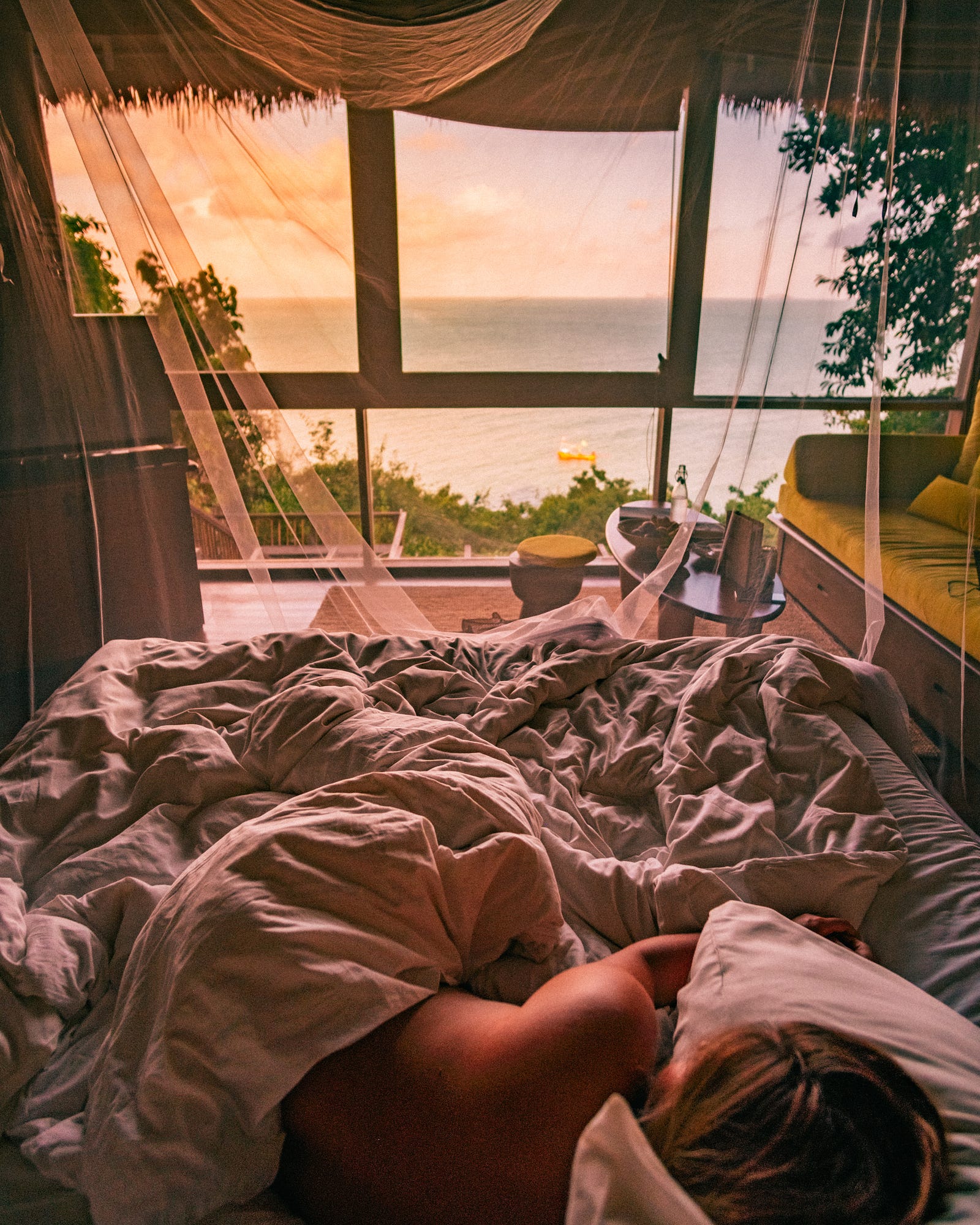
Photo by Klugzy Wugzy on Unsplash


I’ve become obsessed with my sleep since I switched from wearing a Fitbit on my wrist to an Apple Watch.

I wore the Fitbit for several years, and it worked well, but when it conked out and it was time to replace it, I thought I’d try the Apple Watch instead.

The sleep app provided is not as detailed as I would like. My son suggested I add the AutoSleep app to it.

This untechy information seeker took a while to understand all the nuances this app supplied. 

First thing upon waking, I’d find myself absorbed in my numbers and ratings.

This app provides:

  • Time Asleep
  • Sleep Rating
  • Sleep spO2
  • Respiration Rate
  • Sleep Fuel Rating 
  • Readiness
  • Tonight’s Bedtime
  • Sleep Consistency


The categories I’m most interested in — and you should be, too — are Sleep Rating and Sleep Fuel.

The Sleep Rating provides total hours asleep, time in deep sleep, sleep quality, and BPM. This information is vital to know you slept well and are ready for the day.

Sleep Fuel is the most significant category. Yes, deep sleep and total hours of sleep are critical, but the fuel rating shows how efficiently you slept.

Think of fuel the same as the fuel you put into your car. It is more efficient if it’s premium fuel; if it is regular, you get less benefit.

The fuel ratings are Poor, Regular, Plus, Premium, and Jet Fuel.

When I consistently reported poor fuel for several days, I became concerned and decided to see if I could change this. 

Here’s what I did:

  1. I would take a break every hour and take five slow deep breaths to the count of five for the inhale and another five on the exhale.
  2. I would set aside three periods each day of five minutes to sit and “meditate.” By this, I mean, get in a comfortable sitting position or, if you prefer, lie down (I did at times), close your eyes and allow thoughts to pass, and let your mind go within, listening to your heartbeat or paying attention to your natural breathing. This calms you and is restful and rejuvenating.
  3. Finally, at bedtime, take a few minutes to repeat the deep breathing or sit quietly following your natural breath, allowing thoughts to pass without focusing on them.
  4.  Before falling asleep, take another moment to find something you are grateful for that may have happened today. Or, you can be thankful for being alive today or that your heart is beating and your body carried you through another day. Gratitude at bedtime makes you appreciate all your blessings—what a lovely way to fall asleep. 


Right from the start, my fuel rating improved from Poor to Regular. Within a few days, I advanced to the Plus rating. 

One hectic day, I didn’t follow my plan, and the next morning my rating was again a dismal Poor.

I returned to take a few minutes each day using my new calming method, and now my rating is a Premium.

I’m thrilled.

The best news is that I’m feeling far more rested and energetic. All it took was about 30 minutes a day.


"Your life is a reflection of how you sleep, and how you sleep is a reflection of your life. "— Dr. Rafael Pelayo, clinical professor of Sleep Medicine at Stanford University.


Of course, you don’t need a sleep app to tell you how you feel. But, it is so helpful in identifying where you can make improvements.

Try this method by taking a few minutes out of your busy day to relax and calm yourself and see if you notice a more restful sleep and a more energetic wakeful day.

After all, sleep is fuel for your brain, body, and well-being.


Thursday, September 1, 2022

A Famous Songwriter Shares 6 Affirmations That Could Help You Sober Up

 Written by a recovered alcoholic and his friend who wanted to have what he was having in his journey to sobriety.

Photo by Lorenzo Spoleti on Unsplash


In the years leading up to considering sobriety, I watched Paul Williams and Tracey Jackson being interviewed by Oprah Winfrey about the book they collaborated on: Gratitude and Trust — Six Affirmations That Will Change Your Life.

As you may recall, Paul is the Academy Award, Golden Globe, and Grammy-winning songwriter of many outstanding hits, including, We've Only Just Begun, Evergreen, and You and Me Against the World, among others. 

Tracey is the author of Confessions of a Shopaholic and a TV and comedy writer.

Their book Gratitude and Trust threw a wrench into my drinking. The book jolted me into taking a deeper look at my alcohol consumption and forced me to ask a few questions.

The most important question was — am I addicted to alcohol? The next one was — what, if anything should I do about it?

It wasn't the first time these questions tickled my brain, and the book impacted me.

Paul was a severe alcoholic and cocaine abuser for decades. When he co-wrote this book, he was sober for 25 years. 

Tracey was not addicted to any substance but admitted she had many problems — overspending, a control freak, OCD, and men.

Paul and Tracey have compiled Six Affirmations of Personal Freedom in this book.

I recall writing these affirmations on an index card and reading them daily. 

I focused on one at a time, sometimes spending a week on it. Sometimes more. 

The years have passed, and other inspiring books have replaced Gratitude and Trust, yet somehow this one materialized in my thoughts today.

I unearthed it from the vast array on my bookshelves. My attention is once again riveted on these six reminders of where I want my awareness to be.

As the authors advise of the affirmations:

To make them effective tools in reconstructing the way you live your life, you’ll need to make them as much a part of your day as your toothbrush, razor, or morning run.


Six Affirmations of Personal Freedom

  1.  Something needs to change, and it's probably me.
  2. I don't know how to do this, but something inside me does.
  3. I will learn from my mistakes and not defend them.
  4. I will make right the wrongs I've done wherever possible.
  5. I will continue to examine my behavior on a daily basis.
  6. I will live my life in love and service, gratitude and trust.


The first statement is one that grabbed me by the throat — who me? Immediately, I knew the answer to that was — yes, you!

I spent a lot of time looking at my behavior and what I needed to change. It's probably six years since I read the book and worked on the affirmations. I will again write them on a card and begin over with the first.

As the authors state: "You've turned away from defending your behavior to admitting your culpability. You've recognized your part in the problem and are prepared to change."

The second affirmation asks us to look inward. For me, that is turning to God. For you, it may be different. Maybe you will look for your inner voice or intuition. 

The important thing is to understand there is a collaborative spirit inside you connecting to your higher self. Sitting in silence, prayer or meditation will often help you recognize this.

Third — learn from our mistakes and not defend them. I was/am a great defender. It is not an easy habit to break, and I'm glad to have this reminder back in my life. Of course, repeating mistakes is another blunder for me to correct.

Paul and Tracey: "We spend much of our lives running from our mistakes, hiding them, covering them up, lying about them, and often blaming them on others."

Fourth — righting the wrongs we've committed. Luckily, to the best of my recollection, I didn't wrong many people. I was the one I wronged by not believing in myself, by thinking I was weak because I was addicted to alcohol.

The authors remind us that owning our mess is the first step toward healing; it is essential to clean it up by taking action. I'm sorry may be the most necessary words you can speak.

The fifth affirmation may sound like a marathon. Seriously, continue to examine my behavior? Every day?

Yes. Tracey and Paul suggest that we take a close look at our behavior at the end of each day. What didn't you do that you should have done? What did you do that you shouldn't have done? Put those on the top of your to-do list for tomorrow.

And finally, for the sixth, we live in love, service, gratitude, and trust.

If we can do our best every day to keep the first five affirmations centered in our lives, the sixth will unfold naturally.

Gratitude and trust are the predominant emotions, the essence of thankfulness for what we have and knowing that more good is in store.

Sharing our stories and challenges will help others. Service is noticing when someone is in need and doing what we can to address that. 

Giving back is service and a way to show love. Being available to your friends and family and yourself is love.

These affirmations work for alcohol addiction and life in general — in all its glory, pain, challenges, and joy.

Can you embrace these affirmations to change and improve your life? Give it a try. What have you got to lose?


Thursday, August 25, 2022

These 5 Famous and Talented Women Couldn’t Be Saved From Their Drug Addiction

 They tragically died, but can you learn from them?Photo by Diego Lozano on Unsplash

I loved my alcohol and drank for the majority of my adult life. I finally found sobriety almost four years ago, and I couldn’t be more grateful.

It took many years of casual drinking before I began indulging to the point of concern. Sure, there were instances throughout my life where I overdrank, but for the most part, I had “it” under control.

After retirement, however, with my children grown and on their own, my drinking escalated. After all, I was free. I earned my retirement and the right to do as I pleased.

Until that is, I realized my drinking was out of control, and I quit. No, not that quickly. It took two years of reading every quit lit book I could get my hands on, failed twice until finally — as the saying goes; the third time is a charm.

Since giving up the drink, I’ve been passionate about sharing my story and those of others addicted.

Though I never was interested in trying drugs, I understand the lure. Also, a dear family member became addicted to pain pills prescribed by doctors. It broke my heart to see the struggle.

These five beautiful, talented women were addicted to drugs; some also indulged in alcohol, in addition to narcotics. Sadly, they weren’t able to save themselves.

You probably already know their stories, but let’s not forget them or their short, tragic lives.

Five tragedies

Whitney Houston — Ms. Houston rose to fame quickly with her debut album titled with her name in 1985.

Her big acting break was starring in the film “The Bodyguard” with Kevin Costner. Shortly after that, she began to abuse drugs, with cocaine her main choice. She battled her addiction for many years. Whitney’s bodyguard found her facedown in the bathtub. Her death was ruled an accidental drowning along with heart disease and cocaine use. She died at age 48 in 2012.

Marilyn Monroe — Ms. Monroe is one of the most written about, and her story of fame, fortune, and drug abuse is widely known. She worked hard yet had few friends and was lonely though surrounded by adoration. According to sources, Marilyn suffered sexual abuse at the hands of Hollywood producers and studio heads. This treatment exacerbated her drug use and mood disorder. She had sedatives, sleeping pills, amphetamines, speed, and other drugs on her nightstand. Rather than intervene, her doctor continued to prescribe her prescription drugs. Ultimately, this was the cause of her demise at age 36 in 1962.

Judy Garland — The Wizard of Oz is her signature film, and this is when she first became hooked on drugs so she could keep up with the grueling schedule. Her non-stop agenda continued for many years — all the while, she used barbiturates, stimulants, and depressants. Ms. Garland was given these drugs by studio producers so that she could keep working. Eventually, she died from an overdose at age 47 in 1969.

Amy Winehouse — Amy ultimately died from alcohol poisoning, but her first addiction was to drugs; heroin, cocaine, crack, and marijuana, which she abused for many years. She quit taking drugs, and her drinking worsened in an attempt to help with withdrawal. She fell again and had a final episode of binge drinking that killed her at age 27 in 2011.

Janis Joplin — Janis was another iconic performer with an addiction to drugs — meth and heroin and was well-known for her love of Southern Comfort. She tried to sober up by returning to her home from San Francisco, where she was performing, but on each return to California, she would again take up her addictions. Janis overdosed at age 27 in 1971.

Famous yet alone

These women had access to drugs, and money was never an obstacle. More commonly, they were given drugs by the people involved in their careers.

Although famous and celebrated, they were frequently lonely, alone, and ripe for the temptation of drugs and alcohol to offer solace.

I’ve learned that those addicted to drugs often feel isolated and don’t have the support of family or friends.

Our greatest glory is not in never failing, but in rising up every time we fail. — Ralph Waldo Emerson.

Help is available

Please seek help if addiction is a part of your life. You are precious, unique and you can be helped:

National Drug and Alcohol Treatment Hotline 1–800–662-HELP (4357) and Help.org are places for you to begin your new future.

Thursday, August 18, 2022

According to Science — These Are the 5 Best Abs Exercises for You

I don’t expect 6-pack abs at my age, but any improvement would be a plus.

Photo by mr lee on Unsplash

I have a noticeable tummy. It’s rather bulgy. The rest of my body is slender and somewhat muscular yet the abs are lacking in firmness.

I’m sure part of it is my age — I’m well into the Third Third of my life. Another part, the women in my family typically carry their weight in their tummies. I guess it’s destiny.

However, I still work on firming the bulge a few times a week.

I've even found success with the 30-day plank challenge on an online site. I surpassed the 30 days, completing 40 days of planks. 

Part of the challenge was to hold the plank for 2 minutes. Of course, we work up to the 2-minute hold. I achieved the 2-minute mark on day 15 and continued adding seconds every day.

My abdominals ached after the first few days. On subsequent days I didn’t feel the workout as much. However, I know holding a plank for 2 minutes works more muscles than the abdominals. 

My triceps and shoulders felt the workout as well.

I found it surprising that the plank is not one of the top 5 abs exercises.

The exercises

  1. Bicycles — The most challenging abs exercise for the rectus abdomini proved to be the bicycle. Lying on your back, you pretend you’re riding a bicycle. Place your hands behind your head, then bring your legs into tabletop — knees over hips, shins parallel to the floor. With your head in your hands, curl your head, neck, and shoulders up off the floor as you rotate your torso over toward your right leg and extend your left leg straight at a 45-degree angle — aiming your left armpit to the right hip. Reverse the movement to return to center, lower your head down, as you draw your left leg back into tabletop before switching sides.

2. Captain’s Chair —This is a gym exercise using the Captain’s Chair exercise equipment. It is a chair back with two handles, elevated above the ground, with no seat. Place your forearms onto the armrests of the chair and grip the handles with your legs dangling. Slowly tuck your knees in toward your chest. The motion should be controlled and deliberate as you bring the knees up and return them back to the starting position.

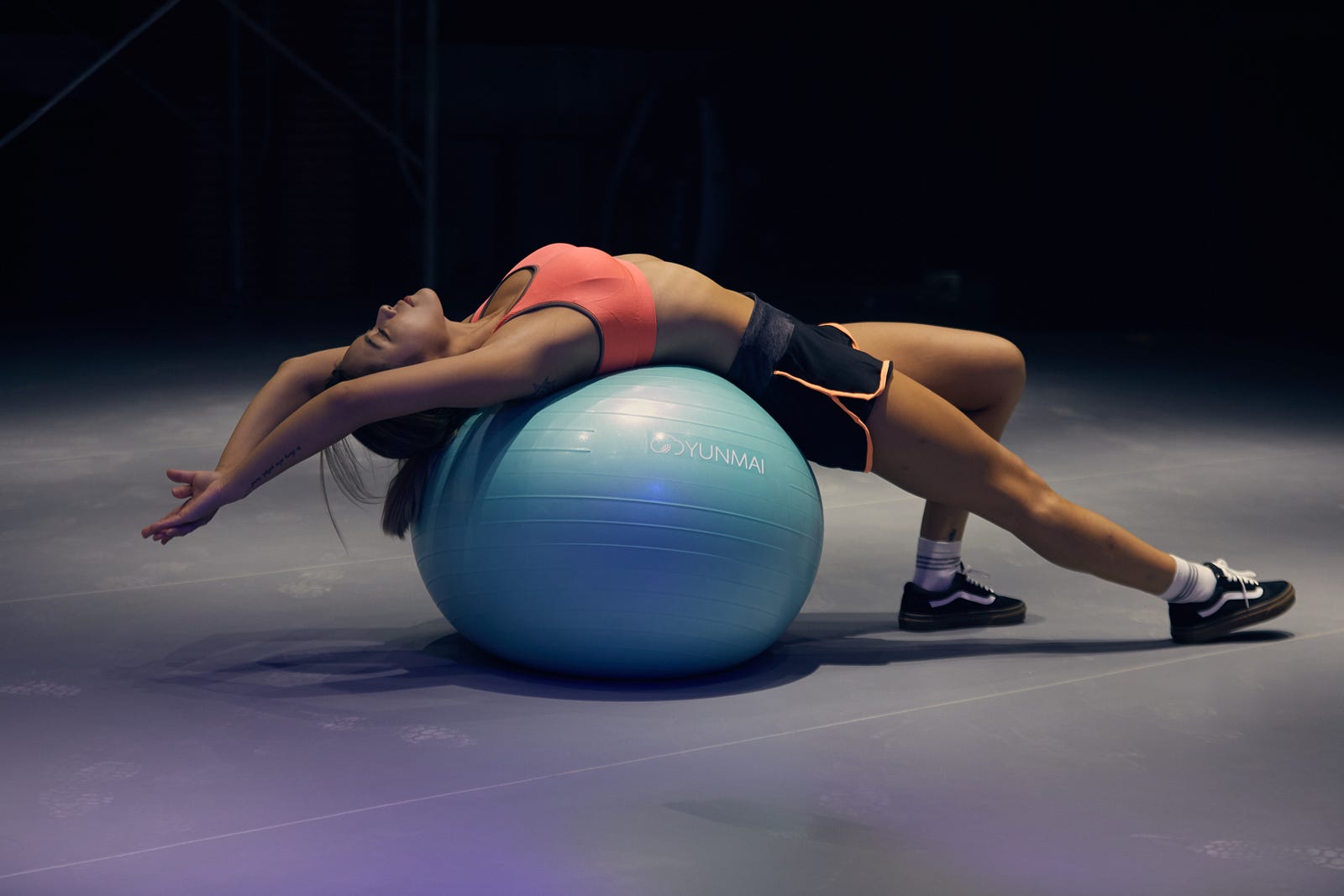
3. Crunches on an exercise ball Lie back on a large exercise ball until your thighs and torso are parallel with the floor, feet flat on the ground. Cross your arms over your chest and slightly tuck your chin in toward your chest. Contract your abdominals and raise your torso up off the ball no more than 45 degrees. Spread your feet wider apart for better balance. To challenge the obliques, make the exercise less stable by moving your feet closer together.

4. Vertical leg crunch — Life flat on your back on a workout mat, interlace your fingers and place your hands behind your head, then extend your legs straight up toward the ceiling so your feet are over your hips. Keep your head heavy in your palms and curl your head, neck, and shoulders up off the floor. Make sure to keep your chin off your chest with each contraction, like you're pinning an orange against your chest.

5. Reverse Crunch — Lie flat on a mat with your lower back pressed to the ground. Put your hands behind your head or extend them out flat to your sides — whatever feels most comfortable — then extend your legs straight up toward the ceiling so your feet are over your hips. Contract your low abs to lift your hips a few inches up off the floor like you’re trying to touch your toes on the ceiling. Lower back down with control.

As the writer for the Well+Good newsletter, Rachel Kraus states — “the most effective abs workout is the one you’ll do consistently.”

The most efficient exercises should target all the different muscle groups in your abdomen: transverse abdominis, rectus abdominis, pelvic floor, and obliques.

The exercises chosen were recommended by the biomechanics lab at San Diego State University. The lab tested 13 popular moves to see which ones challenged these muscles the most.

This was a fairly small study, performing tests on 30 men and women for one hour each. Still, the insights are valuable.

My experience

The bicycle exercise is one I have used for decades. My greatest problem with it is my neck begins to ache after a while. I persevere as long as possible. I do have achy abs the next day or two.

I have not tried the Captain’s Chair, and perhaps I will in the future. I have used an exercise ball in the gym prior to Covid, and I felt results from this one, too. 

The vertical leg crunch is one I used years ago and will give it a go. The reverse crunch is a great exercise, provided I place my hands under my tailbone to ease the stretch. This also proved successful for me.

The reverse crunch is another one I’ve used somewhat consistently. I tend to have lower back issues, so I place my palms on the floor under my tailbone. This helps release pressure.

Will I go back to my planks? Probably, but now I don't feel guilty when I don’t complete them, as they’re not in the top five.

Any exercise we do regularly is a plus. Our bodies love to move and stretch and be well-oiled, and what better way than to give them a workout?


Thursday, August 11, 2022

You're Going to Love These Quirks of 10 Famous Writers


Some of them were truly inspired and gifted.

Photo by Gaman Alice on Unsplash

I love to read. I have since I picked up my first Nancy Drew Mystery as a young child. 

I know my mother read to me — fairy tales mostly. But it was the reading I did on my own that I most remember.

Now I enjoy writing. Since January 2021, I've been writing on Medium and this blog and having fun learning, reading other writers, and keeping all my senses on high alert for new ideas about what to write next.

I also have become intrigued with authors I admire and some whom I've not yet read their work.

I love digging around to see what else is fascinating about them.  

I've written about writers who were severe drinkers — alcoholics for the most part. See my article Check Out These 8 Famous Writers Who Sadly Were Alcoholics published on Medium on March 12, 2022.

                                                            *            *            *

Now I'm curious about the odd quirks and idiosyncrasies of famous authors. 

Here are several exceptional ones:

Gertrude Stein — Lively, bustling Paris streets enlightened Ms.Stein rather than distracting her. She found inspiration no matter where she was — in a cafe or at the local market. She would take out her notebook and write wherever the idea hit.

William Faulkner — This author loved his whiskey and indulging in it while writing was common. He was proud of this habit and is quoted as saying: "And I thought then, if that was the life it took to be a writer, that was the life for me."

Anthony Burgess — had an interesting way of dealing with tedious or repetitious tasks. He would open a dictionary to a random page and use words that appeared to complete the piece he was currently working on. He did this while writing "A Clockwork Orange."

Truman Capote — This author was an extremely superstitious man with weird practices. Truman would never begin or end a piece of work on a Friday. A chronic smoker, he would never permit more than two butts in the ashtray at one time, placing the excess in his pocket. He also would not stay in a hotel room if the room number or the phone number added up to 13.

Dan Brown — Dan says the best cure for writer's block is hanging upside down wearing gravity boots. He insisted this practice helped calm him and enabled him to concentrate on writing. Every hour he would pause his work and do stretches, push-ups, and sit-ups.

James Joyce — Ulysses and other memorable works were written by Mr. Joyce while he was lying down on his stomach, using large blue pencils and wearing a white coat. He had poor eyesight, the pencils allowed him to see his writing, and the white coat reflected more light on the page.

Edgar Allan Poe — Mr. Poe loved his pets and considered his cat, Catterina, his guardian. She would sit on his lap while he wrote. Oddly, according to rumor, the cat died two weeks after Mr. Poe's passing.

Virginia Woolf — Ms. Woolf believed the best way to write was standing at a desk built just for that — allowing one to write while on her feet. It was three and a half feet high with a tilted top. She spent two and a half hours each morning writing. Legend has it that Ms. Woolf wrote this way because her sister Vanessa Bell, the painter, stood painting and didn't want to be outdone by her sister.

Lewis Carroll — Mr. Carroll also preferred writing at a standing desk ala Virginia Woolf. He had a preference for the color purple for his ink. He used this ink as a mathematics teacher at Oxford and continued using it for his writing.

Agatha Christie — Ms. Christie loved munching on apples while she soaked in the bathtub conjuring up plots for her mysteries. Her mother was against allowing Agatha to learn to read. At age 8, Agatha taught herself.

                                                            *        *        *

Wouldn't you love to have a time machine and look back at the fascinating lives of these outstanding writers?

I'd also love to get into their heads to see how they mustered up the ideas, characters, and plots.

Their idiosyncrasies make them even more captivating.

I find it engrossing to see what routines and neuroses creatives employ in their lives, proving that whatever works for you is what you need to do. There's no need to follow a routine that "seems" right if it isn't suitable for you, whether you're a writer, a painter, a plumber, or a heart surgeon.


Thursday, August 4, 2022

Bob Dylan is One of Many Famous Creative People Who Love to Walk

Though not famous, I, too, am a daily walker, and many ideas are born while strolling the ‘hood.

Photo by Robin Ooode on Unsplash

Bob Dylan was seen meandering up and down the side streets off Ocean Avenue in Long Branch, N.J., one dark, stormy afternoon.

A resident considered him a vagrant and called the police. 

A 24-year-old officer arrived and asked Bob for his ID. He didn’t have it on him, so she asked him his name. Bob Dylan, he responded, with no sign of recognition from Officer Kristie Buble. 

She asked him what he was doing in Long Branch, and he replied that he was there for a concert. Still no realization of who he was. After all, this man was disheveled and rain-soaked and looked like a lost old man.

He was brought back to his hotel, where his manager vouched that he was, indeed, Bob Dylan.

He was roaming the streets looking for the house where Bruce Springsteen wrote: “Born to Run.”

We’ll never know if Dylan ever did locate that house.

In another century

Ludwig Van Beethoven was another walker, often through the countryside while composing. It is well-known that he was inspired to create his Symphony №6 — the Pastoral Symphony, because of how it evokes the landscapes through which he walked.

Virginia Woolf, one of England’s most renowned writers, was an avid walker. She would recite her drafts while she was strolling.

The main character of Mrs.Dalloway, Clarissa, takes walks through London. 

Ms. Woolf wrote in her journal: “To walk alone in London is the greatest rest.”

Many have discovered inspiration or conceived a new plan while taking a stroll. 

Getting lost in our thoughts while wending our way down country lanes or city streets is a booster for all forms of creativity.


"All truly great things are conceived by walking. "— Friedrich Nietzche.


Albert Einstein was fond of sleeping (at least 10 hours nightly) and walking.

During his time at Princeton University, he walked a mile and a half round-trip daily while devising his theories on quantum mechanics.

Henry David Thoreau walked around the woods along Walden Pond for four hours daily. He wrote: “Methinks that the moment my legs begin to move, my thoughts begin to flow.”

                                                        *            *            *

In recent times, Steve Jobs was another walker who strode to solve problems. 

To clear his head and exercise, he often walked the streets of Palo Alto. It was also commonplace for him to hold meetings while walking. He believed it kept everyone focused, effective, and creative.

Walking sparks creativity

According to a study by Stanford University, walking can increase creativity by an average of 60%, and as high as 81% in some cases.

The researchers have found that “creative thinking improves while a person is walking and shortly thereafter.” 

The study found that walking indoors or outdoors similarly boosted creative inspiration. The act of walking itself, and not the environment, was the main factor. Across the board, creativity levels were consistently and significantly higher for those walking compared to those sitting. — Co-authors Marily Oppezzo and Daniel Schwartz.


I often will get up from my computer and wander around the rooms in my home when stuck for a word or thought, and voila! Out of the ethers, the answer appears.

                                                            *            *            *        

I love Austin Kleon’s book Keep Going. In it, he writes about his daily morning walks with his wife and two boys — rain or shine. 

He has this to say:

"Walking is a way to find possibility in your life when there doesn’t seem to be any left."


Give walking a go and see what you may create as a result.

Thursday, July 28, 2022

Is Pickleball a New Way to Stay Fit or Just a Craze?

It’s the latest fad to hit the courts — but will it last?

Photo by Ben Hershey on Unsplash

In 2013 I made an acquaintance with a woman married to my husband’s friend.

During dinner, she asked if I played pickleball? What the heck is pickleball?

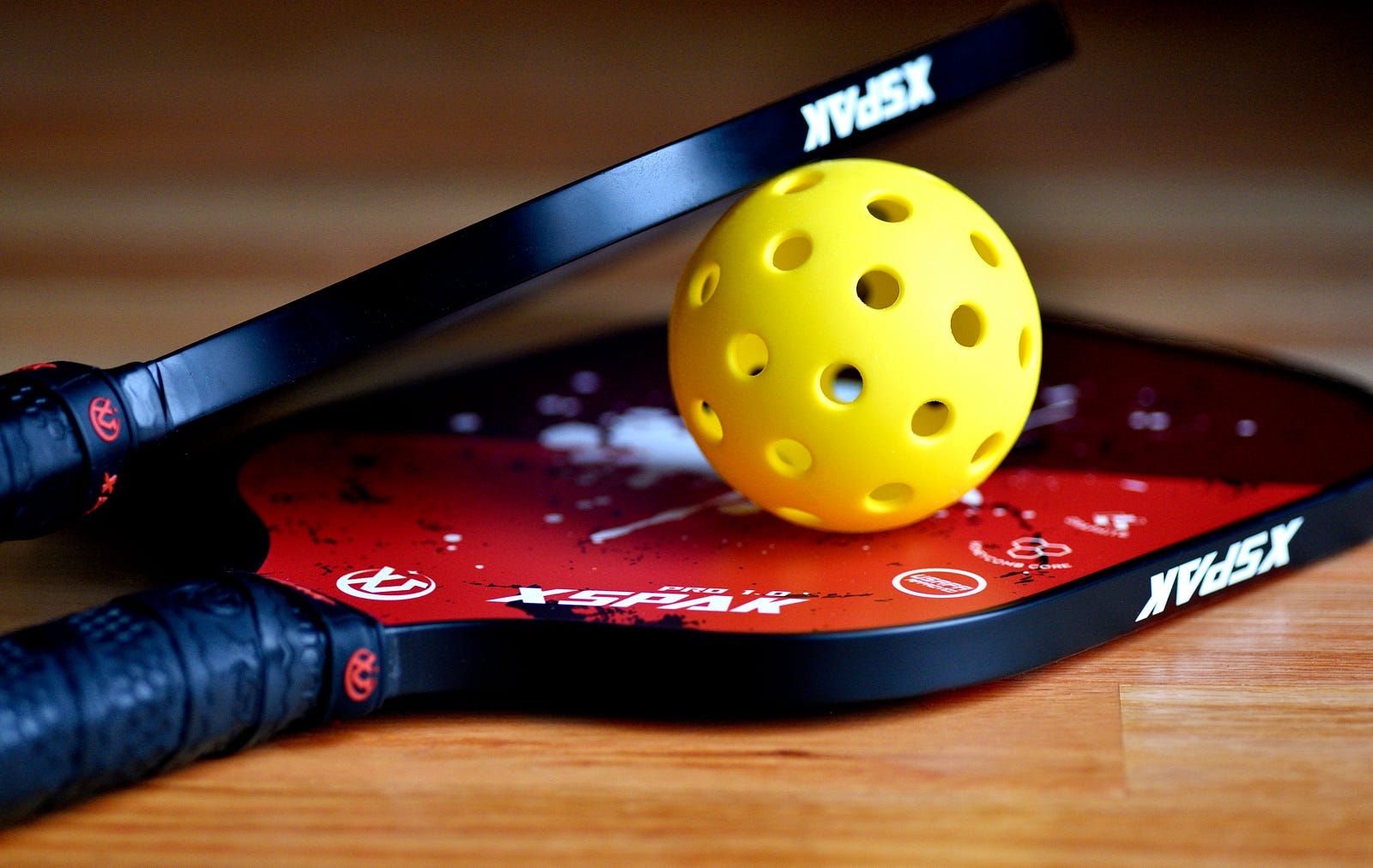
Carol explained it was a cross between tennis and ping-pong and maybe a bit of badminton thrown in, too.

How the heck did this game come to be, and why the silly name?

The story is that in 1965, three dads tired of hearing their children complain of boredom created this game for them. They loved it.

There are two versions of how the name came about. The wife of one of the men coined the term as the game is a combination of three other sports, referencing the second-string crewing the “pickle boat” in rowing.

Another understanding is that the game was named after one of the creator’s dogs, “Pickles,” as she loved chasing the ball.

Learning

Carol is several years older than me and reported that the game is perfect for older adults as the court is smaller than a tennis court, approximately one-fourth the size, and the game is usually played with doubles.

Clearly, not as strenuous as tennis, yet still enough movement to get quality exercise.

Another six years after first hearing about this game, I ventured out to give it a whirl.

My friend Shannon and I signed up for lessons through the local Park and Rec, and I have never looked back.

Shannon suffered tendonitis the first month of play and decided it wasn’t her favorite sport.

I love the game. It’s challenging, fun, and a great way to develop new neural pathways in the brain. Just try remembering who served last or what the score is! Fortunately, four of us are playing, so between us, we usually come up with the answers.

We also must learn to serve, return the ball and remember the rules — and there are a few.

I started playing late in 2019 and have advanced slowly but steadily in my skill level.

Individuals can take lessons from private coaches, and the cost is reasonable, or many communities offer group lessons.

I am involved in league play — all-women teams are my favorite. Depending on where you live, you can play the game all year.

In Arizona, the winter months from October through April are ideal for outside play. The summer play takes place very early in the mornings or indoors. 

Quite a few gyms have added pickleball courts or marked basketball courts for pickleball play, too.

Nationwide, tennis courts are being converted into pickleball courts — requested by those who live in those communities.

Over 9,500 pickleball courts throughout the U.S. prove this game is here to stay.

Anyone can play

Pickleball is not only for older folks, as it appeared in the beginning. Men and women of all ages are now playing. Many have tennis backgrounds and are transitioning as fewer injuries occur with pickleball. 

Children are getting into the act, too, and some schools have added the game to their Physical Education programs.

Celebrities have also joined in on the craze. Ellen DeGeneres, George Clooney, and his wife, Amal, Matthew Perry from “Friends,” Leonardo DiCaprio, Stephen Colbert, and Brene Brown, author, and speaker, are among the devotees.

                                                            *        *        *

To say pickleball has changed my life is not an overstatement. 

Before learning this game, my exercise activities consisted of hiking the hills, walking my Golden Retriever, taking various exercise classes and yoga at the gym, and a bit of strength training at home. Yes, a considerable amount, though, of course, spread throughout the week.

I still do those, except for the gym classes I eliminated because of Covid. 

Adding pickleball to the mix has significantly improved my fitness level. I play three to five times a week for one and a half to two hours each time.

The best part of pickleball? I have made amazing, kind, supportive friends who have become very dear to me. 

The bottom line — I have not one negative thing to say about pickleball — okay, one — we need more courts! 

Pickleball is a craze — a healthy, fun, exuberant sensation that is here to stay. Give it a try — you’ll love it.

Thursday, July 21, 2022

Can Brad Pitt's Latest Revelation About His Alcohol Addiction Help You?

 Does telling our stories about our addictions help others? —Maybe especially if you're a celebrity.

Photo by Sicong Li on Unsplash

Handsome, talented Brad Pitt was addicted to alcohol just like millions of ordinary people. 

I'm not saying you and I are ordinary in the sense of being average or unremarkable, so don't be offended.

He's a celebrity, and we often put them on a pedestal. Frequently, they fall off the darn thing only to reveal their humanness. 

If they're brave enough, they also are willing to be vulnerable.

Brad Pitt dared to do just that. And not just once. He's given multiple interviews where he admitted he was addicted to the drink.

It took Angelina Jolie filing divorce papers and a drunken altercation on a private jet with his son for him to sober up.

Pain and alcohol

What's up with these celebrities and their addictions, you might ask. They have fame and fortune. Most of them have great looks, often beautiful spouses and adorable children. They have the wherewithal to buy whatever they desire. 

Why do they turn to drugs and alcohol? 

Many of them, Brad Pitt included, are reminders that alcohol addiction does not play favorites. It can impact people from all walks of life, and it does. No one is bulletproof to alcohol's assault.


Pitt has revealed:

"I have always felt very alone in my life…alone growing up as a kid…alone even out here. And it’s really not till recently that I have had a greater embrace of my friends and family."


How many of us can identify with that feeling of loneliness. We can feel alone even when surrounded by many people. Sometimes, being with others and perhaps not feeling as though you fit in exacerbates the feeling of aloneness.

Pitt also said he suffered from depression and was unsure who he was.

 In Hollywood, it is often bandied about that one must be their "authentic self." He recently admitted he didn't know what his authentic self was.

"Out here in California..there’s a lot of talk about ‘being your authentic self’ it would plague me, what does authentic mean? For me it was getting to a place of acknowledging those deep scars that we carry."


We don't know how deeply others suffer — famous or not. No one gets through life without some degree of pain.

Alcohol is a common antidote to that pain. Ultimately, backfiring, as it did for Brad.

The demise of his marriage helped him see the harm his alcohol addiction was causing.

Being vulnerable

Pitt attended Alcoholics Anonymous meetings and participated in a men's only group.

He comments:

"You have all these men sitting around being open and honest in a way I have never heard. It was this safe space where there was little judgment and, therefore, little judgment of yourself."


He also was astonished and pleased that no one in the group sold his stories to the tabloids.

Pitt admitted that it was very freeing and of great value to disclose his ugly side.

Another significant facet for many who seek freedom from the drink is to embrace a friend.

Pitt has credited his buddy and fellow actor, Bradley Cooper, with helping him find sobriety.

Other writers and I on Medium have taken the leap and revealed our tales of alcohol addiction. It wasn't easy the first time I published my account of my addiction. However, it was a huge relief.

I have learned so much from readers' comments to my revelations. I also understood and had compassion when writers were brave to tell their alcohol nightmares, too.

Telling our dark secrets about addiction opens up the portal for others. We reveal our shame, and they may feel they can do the same.

The National Institute of Alcohol Abuse and Alcoholism reports that millions of people wrestle with alcohol problems, but only a tiny fraction seek treatment, as Pitt did.

Brad Pitt’s revelations can help you give up booze. He didn’t say it was easy. He went to AA meetings and sought a therapist and the help of a friend. There is no need to go it alone.

Pitt summarizes his recovery humbly:

"I am those mistakes. For me, every misstep has been a step toward epiphany, understanding, some kind of joy."


If you're still drinking, why not join Brad and those of us who have quit alcohol? Be a part of that tiny fraction who have chosen the world of sobriety.

There is help out there. See your doctor or contact a treatment center, AA or start by Googling "help with alcohol addiction."

Your world and a better life are waiting. 


Thursday, July 14, 2022

Are You Strong Enough to Face Your Difficult Emotions?


We all experienced emotions we'd rather not have — but if you're alive, there's no alternative.

Photo by Lee Chinyama on Unsplash

Fear. Grief. Guilt. Insecurity. And their many cousins — frustration, loneliness, anger, and shame. Oh yes, then there's resentment, spite, and sadness.

Sounds overwhelming, doesn't it. 

Do you tend to run from these feelings? Or stuff them? Resist them, perhaps?

Attempt to drink or drug them away?

In the past, I drank some of these emotions away. Or instead attempted to. Other times shopping for unneeded items felt like a way to escape uncomfortable feelings.

Do you accept your challenging sentiments? Maybe even observe them with curiosity?

Resistance

There's a saying I remember hearing for years, and it speaks the truth:

 What you resist, persists. — Carl Jung, Swiss psychologist.


If you resist your emotions, they will not only persist but may enlarge, drawing energy into the resistance cycle, thus producing more resistance and problems.

Hiding, covering up, or denying your feelings is what resisting means.

I'm sure I've experienced all of the trying emotions I've mentioned at one point or another in my life. I've lived a long life.

What about you? Can you recall enduring these difficult conditions of the heart and mind? I know you have.

                                                            *            *            8

My oldest son, Anthony, died six and a half years ago at age 36 due to complications of ulcerative colitis. 

Pain, anger, confusion, frustration, and grief were all emotions I had to face. Oh, and guilt. 

As mothers, we think there is always something else we could have done. 

Those of you who have lost a beloved know of where I speak.

Anthony was an adventurer, sailor, fisherman, and lobsterman. This beautiful soul also experienced myriad emotions in his short, bold, and brave life. 

                                                            *            *            *

Acceptance

We need to allow these challenging emotions and acknowledge and observe them, not ignore, resist or numb ourselves to them.

Everyone has experienced challenging times. We must get to the other side; the only way is through. I know you've heard that before, and it's because it is a truism.

We need to feel every emotion before we can release it. The pain won't resolve until we turn toward it, not away.

And what happens when you get to the other side? 

You're stronger, more resilient. You learn from your emotions. You emerge forever changed by them.

Some of these emotions will stay with you forever, as in my grief over Anthony's death. A parent doesn't recover from a child's passing. 

We must stay open to what our complex life issues can teach us. We learn to accept it and grow from it.

We miss our beloved departed forever, and that love makes us more compassionate and grateful for every moment. That is, if we allow ourselves to truly feel and integrate the emotion.


Anger, fear, resentment, jealousy — admit you are feeling these emotions. Don't shy away from them or feel ashamed. Face them, and you will become stronger by dealing with them head-on.

 Once you feel them, you will understand them. You will be able to discover the source. Some emotions, such as grief, are clear where they stem from. Others are not so obvious.

You will also develop a strength you didn't know you were capable of having. You will own your power.

All emotions are part of the human experience. They're normal. You are "normal."

Our fears, ignorance, misunderstandings, and insecurities are what bring on the emotions.

Remember, these emotions are the result of our circumstances. Often trauma from childhood or a relationship, illness, or anxiety will cause these emotions to appear.

Your life circumstances will be easier to deal with as you have conquered what may have been holding you back.

I'm not saying this is going to be easy. Many things worth achieving are difficult. 

You have mastered many challenges in your life — you can explore your emotions, question them and ultimately find peace.

Please seek help from a therapist if you find this confrontation is too hard to face alone. 

Thursday, July 7, 2022

Does a Solid Daily Routine Help Creative People Achieve More?


Or would you rather just wing it — do whatever “feels” right?

Photo by Arnel Hasanovic on Unsplash

I love my routine. It helps me feel secure and calm and organized.

In July of 2018, I started The Miracle Morning a book by Hal Elrod, Anna David, and Joe Polish.

There is a variety to choose from such as The Miracle Morning for Entrepreneurs, for Real Estate Agents, one for Parents and Families, Network Marketers, etc.

Since I planned on quitting drinking I bought the one for Addiction Recovery.

I am still following this routine today — a full four years later and I must say it is an effective plan that has allowed me to realize a much more productive day and successful life.

Of course, giving up alcohol several months later, also added to my success. 

This practice is one I would recommend for anyone who wants to achieve improvement in all areas of their life.

The routine is one-hour first thing upon waking dedicated to focusing on positive LIFE SAVERS. 

The SAVERS are Silence, Affirmations, Visualization, (or meditation), Exercise, Reading (uplifting or spiritual works — whatever inspires you), and finally Scribing (or journaling). I have found it is a perfect start to the day.

Find the volume that appeals to you for your specific field of interest and learn how it can change your morning. 

Now that we’ve looked at the morning, it’s time for the rest of your day.

One routine doesn’t work for everyone

Now for the contradiction concerning routines. The Miracle Morning routine is a wonderful one for most — albeit not everyone. 

The good news is that this routine can be adjusted depending on your idiosyncrasies. 

If you’re not an early riser but rather a night owl, move the SAVERS to the evening.

What is crucial is that we implement a daily routine and stay with it. Our minds and bodies — e.g. muscle (or mind/body) memory — will fall into a rhythm if we repeat it every day.

If you love rising early — great. 

Is that when you are in your best mood or imaginative space? Or when time is available to you to write, paint or sculpt or do whatever is your creative activity? 

After my morning routine, I typically take my Golden Retriever, Merlin, out for a jaunt, returning home to a few cups of coffee and a light breakfast. 

Often, a few games of pickleball take place several mornings a week.

Daily chores are next and soon time for lunch. 

Finally, I get to create. Right now I’m focusing most of my efforts on writing for Medium. 

Occasionally, I will take the time to design and create a collage. It’s a much different artistic process than writing — yet a challenging exercise for my brain.

Many consider mid-afternoon as a vacant brain time.

Not me. Afternoons, beginning between 1 and 2, is the time my mind conjures ideas of which to write. 

It also helps to have a few inspirations jotted down ahead of time to loosen the juices.

I will be at my computer for the next few hours until the time arrives to begin preparing dinner. (Hubby gets hungry.)

By this time I have usually completed an article, including a photo, title, and subtitle and I’m ready to hit “publish”.

This is a very satisfying day for me.

Lists

A part of my routine are lists. As I mentioned I prefer having a few ideas for articles at the ready before I settle down to write.

I also rely on a weekly to-do list. This contains items I MUST do, those I SHOULD do, and those I WANT to do.

My list helps keeps my thoughts and needed actions organized. 

Each category contains at least three items to be completed. I love crossing them off as I finish each. So satisfying.

At the top of the page is what I consider to be my most important goal for the week. For example; this week's primary goal was to do something for me. 

I buy pre-printed pads that have the categories (Must do, etc.)listed for easy access. They are available online from the Living Well Shop. 

What about “you time?”

I was spending time in California, with my son, Nick and we decided we hadn’t visited a museum in months. Nick chose the Oakland Museum of California. There was a specific exhibit he wanted to view. It was the story of Edith Heath, the founder and creative mind behind Heath Ceramics in Sausalito. Fascinating. 

I’m so glad he chose that museum even though I didn’t know I would be interested in that exhibit. 

Edith was an inspirational individual — way ahead of her time.

 I am motivated to be more creative and look for other artistic outlets to explore after seeing her story.

Taking time for oneself is critical self-care, stimulating your mind, and satisfying your curiosity. Plus, nothing beats learning something new and interesting. 

You never know what may spring from an outing. It’s imperative to stretch and grow and with a routine in place daily, you will have more opportunities to find pockets of time to investigate new areas of interest.

                                                            *    *    *

By the end of the week, I easily see what I’ve accomplished and what still needs to be achieved. The left-over tasks are moved to a new list that will be prepared Sunday evening. 

My routine helps me feel efficient and effective.

Do you have a routine that streamlines your day? Do you make lists? Do you find it helpful to have either?

Some people may feel stifled with a routine. They are more easygoing and carefree than me. This is fine, of course.

We need to know ourselves, what works for us and how we are most successful and happy.


Thanksgiving

I wish my readers a happy and blessed Thanksgiving Day. I am so grateful for the four years I have been writing and you have been gracious e...